2026 · Abakwa Mythlands · Designer and engineer
An open-world 3D Bamenda, built from the real map
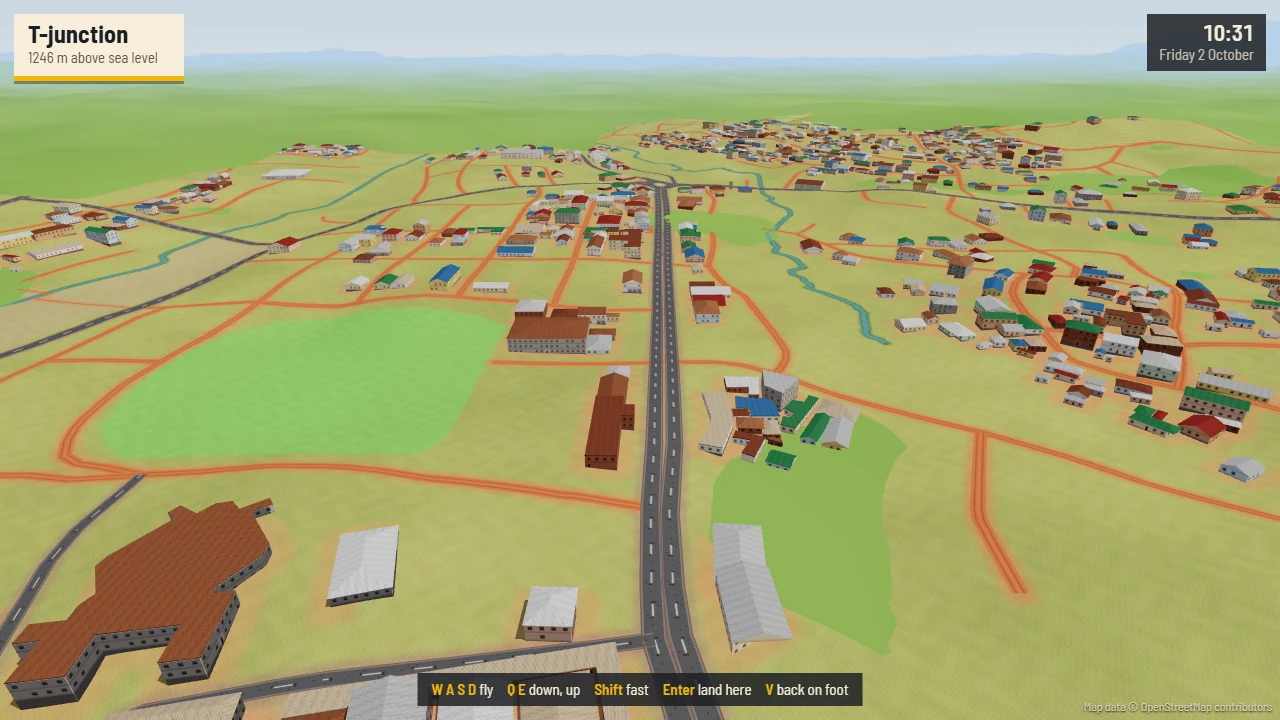
Two regions built from OpenStreetMap: about 142,000 buildings in the North West and 94,000 in the South West, streamed in 128 m cells by a web worker. A simulation runs the people and the economy; players drive taxis, build on land they own, and earn every game day whether they are online or not.
- built with
- Three.jsJavaScriptWebGPU / WebGL2Web WorkersRapier physicsNode + wsOpenStreetMap
- 142,000
- buildings, North West
- 94,000
- buildings, South West
- 2
- regions
Bamenda, Bambili, Bafut, Santa, Bali and more
Buea, Molyko, Mutengene, Limbe
a coach runs between them
The pipeline, in 5 stages.
- 01
Map
Real roads, buildings and places from OpenStreetMap for both regions.
- 02
Stream
The world is built in 128 m cells by a web worker, with low-detail proxies far away.
- 03
Simulate
People with families and jobs, councils, markets, weather and news on the server.
- 04
Play
Walk, drive taxis and bikes for fares, build on your plot, chat with everyone online.
- 05
Measure
Scripts record draw calls, p95 frame time, stalls and GPU cost into docs/perf.
The world
Abakwa Mythlands is Bamenda as a game: the real streets, quarters and landmarks, built from OpenStreetMap, with Bambili, Bafut, Santa, Bali and the other towns around it. A second region covers Buea on the slope of Mount Cameroon and Limbe on the sea. A coach runs between the two from the motor parks.
Three references guide it, in this order: WorldBox for how it works (a living simulation), GTA for the real city, Roblox for the blocky look and for building.
A living town
The server simulates people with families and work, fons and mayors, markets, farms and animals, weather and a daily newspaper. Players arrive with 20,000 FCFA, drive taxis and bikes for fares set by distance, claim a plot with the first piece they place, and build. A market stall earns from the people living around it; a house becomes a real home a family moves into, and pays rent. Everything earns every game day, whether the player is online or not.
Engineering
Rendering is Three.js on WebGPU where it exists and WebGL2 elsewhere. The world streams as 128 m cells built off the main thread by a web worker, with low proxies beyond; driven vehicles can hand over to a Rapier physics worker. Performance is measured, not guessed: scripts take standard screenshots, drive down Commercial Avenue for 30 seconds, and record draw calls, triangles, p95 frame time, main-thread stalls and GPU time into the repository.
It runs in a browser on a PC and on a phone, with a thumb stick and context buttons on touch screens, and installs nothing.